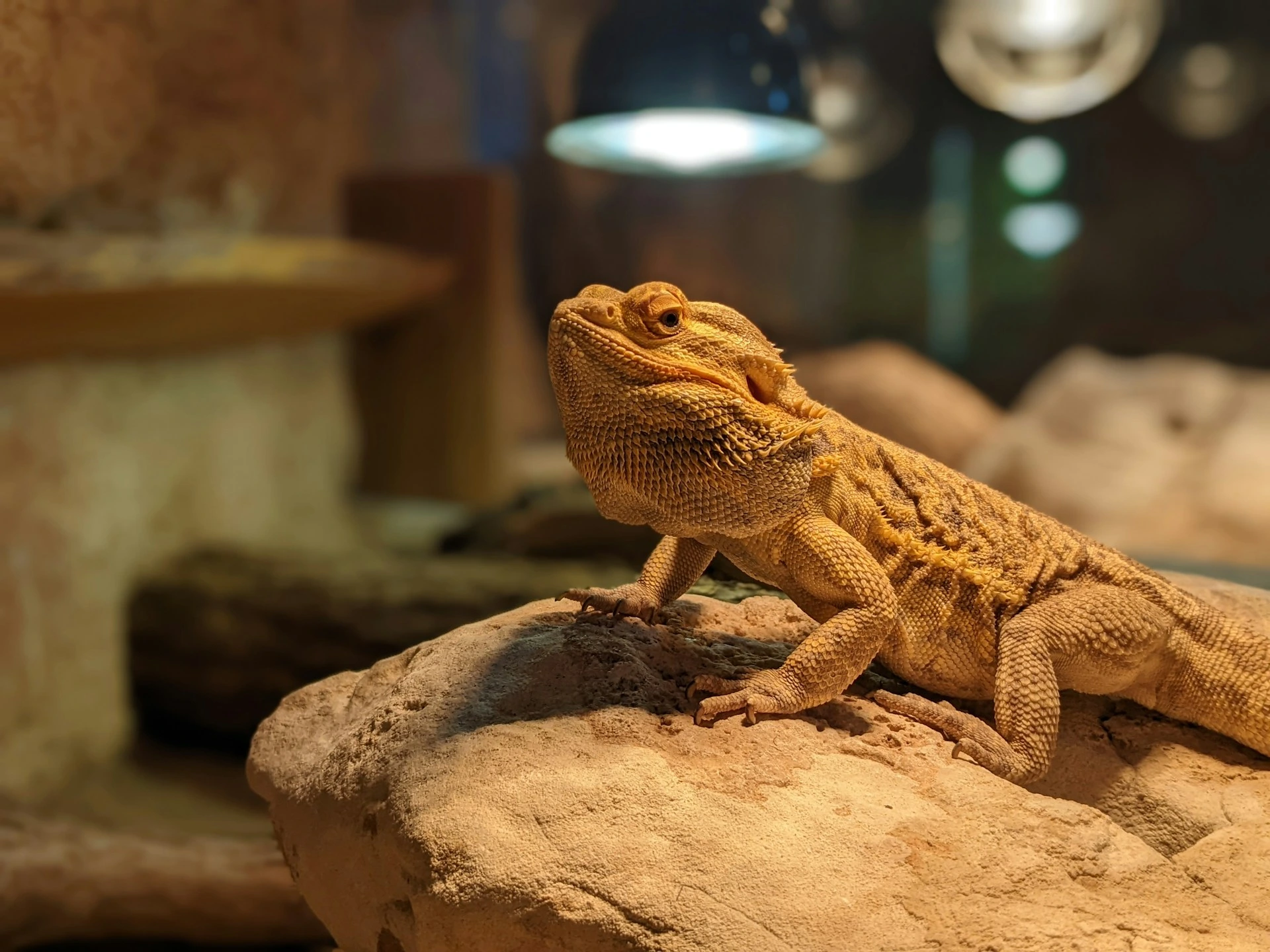
Bearded dragons may look tough with their spiky appearance, but these scaled pals are actually sensitive creatures who rely on their environment to stay healthy. At Alpha Veterinary Center in Severn, MD, our veterinarians often remind reptile owners that a proper setup is the foundation of good health. Bearded dragon care begins with creating the right home—one that mimics their natural desert habitat. Without it, even the healthiest reptilian friend can quickly develop medical problems.
When new owners ask our veterinary clinic about the basics of reptile care, we emphasize habitat first. Temperature, lighting, and enclosure design all work together to keep your bearded dragon comfortable and thriving.
The Ideal Enclosure
A bearded dragon’s home should provide space, security, and stimulation. It also needs to allow your pet the ability to regulate its own internal temperature. Juveniles do well in smaller enclosures, but adults need at least a 75–120-gallon tank to roam, climb, and bask. Glass aquariums with screened lids are common, but the enclosure must be large enough to allow temperature gradients and include areas for basking and hiding.
Proper flooring is another consideration. Avoid sand or loose substrates, especially with juveniles, as these can cause digestive blockages if swallowed. Instead, reptile carpet, tile, or paper towels provide safer, easier-to-clean options.
Pet MD has a bearded dragon care sheet here.The Royal Society For The Prevention Of Cruelty To Animals has an article on beardie care here.
Temperature and Lighting Needs
Temperature control is critical to your reptilian buddy’s well-being. Bearded dragons require a gradient of temperatures within their enclosure:
- A basking spot of 95–105°F
- A cooler side of around 75–85°F
- Nighttime temperatures that can drop to 65–75°F
Equally important is UVB lighting, which helps your bearded dragon produce vitamin D3 for calcium absorption. Without it, they risk developing metabolic bone disease, a painful and sometimes fatal condition. Lights should be kept on for 10–12 hours per day and replaced every 6–12 months, even if they still appear functional.
Diet and Nutrition
Bearded dragons are omnivores, meaning they eat both plants and insects. A balanced diet includes:
- Insects such as crickets, mealworms, or dubia roaches. These will need to be dusted with nutritional powder, which is a process known as gut-loading. Ask your vet for recommendations.
- Leafy greens like collard greens, mustard greens, and dandelion greens
- Occasional fruits such as berries or melons as treats
Young dragons need to eat more insects, while adult diets should be shifted toward more plant-based meals. Fresh water should always be available, even though these desert dwellers don’t drink much.
Behavioral Needs and Enrichment
Like your canine buddy or feline pal, bearded dragons benefit from enrichment. They enjoy climbing branches and basking under lights. Many can even enjoy supervised time outside of the enclosure, though you’ll need to provide a safe environment for this.
Beardies are more fun and more personable than most reptiles. Some owners are surprised to learn that bearded dragons recognize their humans and may even enjoy gentle handling. Providing mental stimulation keeps your reptilian companion curious and engaged.
Common Health Issues in Bearded Dragons
Even with excellent care, bearded dragons can face health problems if their needs aren’t met. Our veterinarians frequently diagnose:
- Metabolic bone disease: Caused by calcium deficiency or poor lighting.
- Respiratory infections: Linked to humidity issues or poor ventilation.
- Parasites: Internal parasites can affect digestion and energy.
- Impaction: Blockages from swallowing substrate or undigested food.
Recognizing symptoms such as lethargy, swollen joints, or refusal to eat is critical. A prompt veterinary exam ensures your reptilian buddy gets the treatment they need.
Fun Facts About Bearded Dragons
- These cute reptiles “wave” their arms as a form of communication.
- Bearded dragons can change the shade of their skin slightly to regulate temperature.
- They are native to Australia but are among the most popular reptiles in American homes.
Bearded dragons can be great kids’ pets, too, though we only recommend them for mature, responsible children. Click here to read our blog on choosing a reptile for children.
FAQs
How long do bearded dragons live?
With proper care, they can live 8–12 years in captivity.
How often should I feed my bearded dragon?
Young dragons may need daily insect feedings, while adults do well with insects a few times a week and fresh greens daily. Ask your vet for specific advice.
Do bearded dragons need baths?
Yes, shallow baths can help with hydration and shedding. Safety first! Ask your vet for tips.
Can I keep two bearded dragons together?
It’s not recommended. They can become territorial and fight, leading to injury.
Visit Our Severn Veterinary Clinic for Reptile Care
Searching for a reptile-savvy vet near me in Severn, MD? At Alpha Veterinary Center, our veterinarians provide expert care for bearded dragons and other exotic pets. Whether you need guidance on setting up the perfect habitat or treatment for a health concern, our veterinary clinic is here to help your reptilian friend thrive. Call us today to schedule an appointment and give your bearded dragon the care they deserve.
Click here to visit our Services page and learn more about our clinic and the animals we treat.
This blog is intended for informational purposes only. Always consult with your veterinarian for professional medical advice, diagnosis, or treatment tailored to your pet.